


A long time ago I was a public school teacher. A career I had for over 35 years. From the time I started one thing was important to me - creativity. I’d try out different things violating the edicts with fidelity & intentionality. I learned that when I did things the way the “experts” prescribed I was miserable, and my students not only didn’t succeed but were also miserable. I would do things different than my colleagues because if someone was going to get in trouble, I’d much rather it be me. One thing I tried to institute was drawing, maybe not every day, but as part of handwriting instruction - even when the state mandated we stop teaching handwriting. I’d use Mark Kistler’s Draw Squad with the 180ish lessons to get kids started. Once when I was on helping during a long term leave and another teacher took over my class Elaine, one of my third grade students, took over those lessons. Sadly, I think she still hates me for leaving, but I was so proud of her for taking the lead. It seems most teachers are afraid of art and only relegate it to “art class.” I know in college “Art Teaching Methods for Elementary School Teachers” was a class designed to make sure new teachers thought art was hard and something they couldn’t understand let alone do beyond cutting things out for bulletin boards.
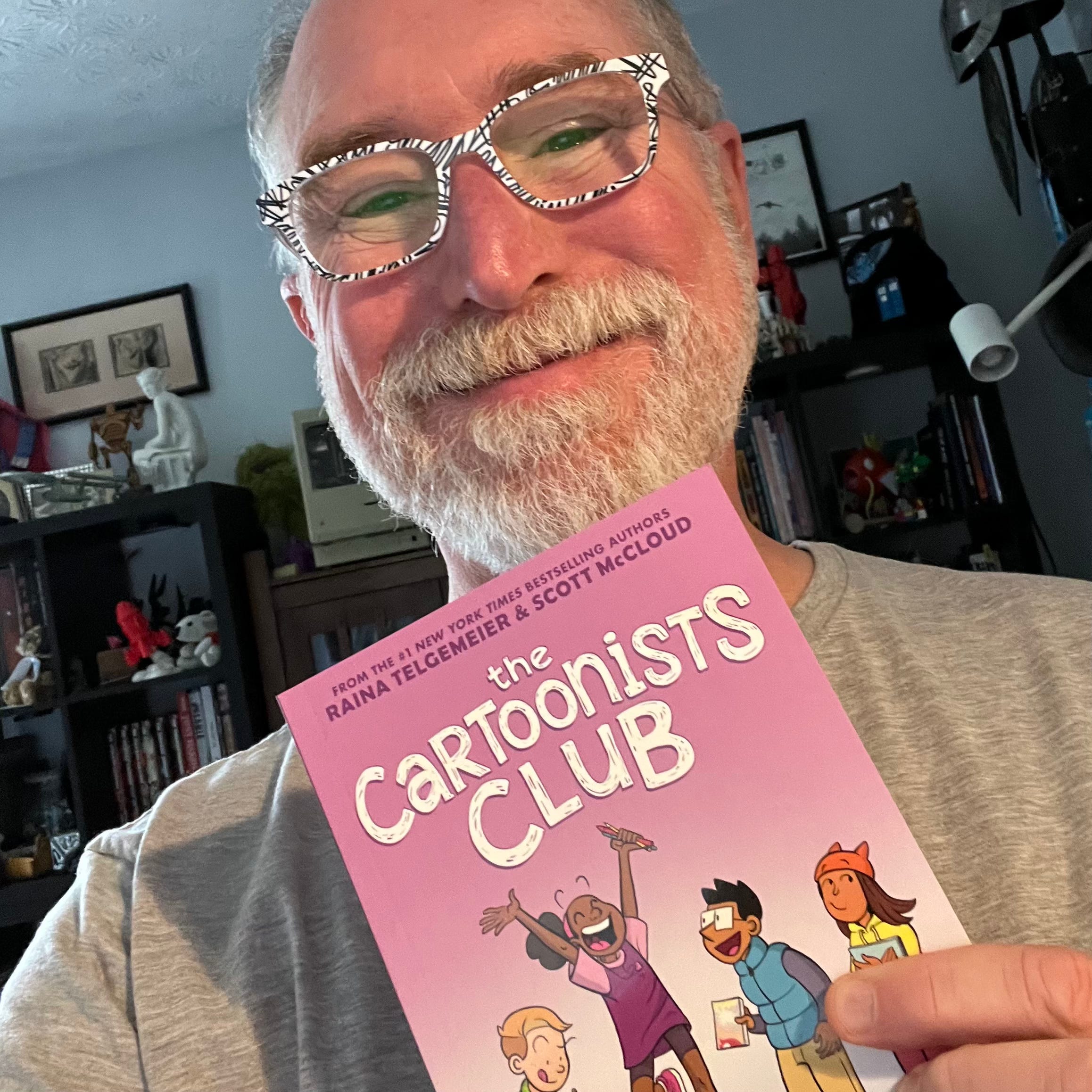
The Cartoonists Club
I know I’m late in talking about The Cartoonists Club which should not only be in every elementary school library, but in every elementary school classroom if the teacher wants to promote creativity, then again some teachers and state curriculums don’t (promote Creativity that is). I figured my LCS would get copies once it was released… I was wrong. They finally got a copy in last week which I immediately bought and read.
It’s the story of a group of students who get together to make comics. It starts with simple drawings passed around in class and ideas bubbling in their heads. With the support of a library media specialist (a rare thing in this day and age) they start a club and learn about the art & science of comics.
Each chapter takes them on a journey learning step by step about drawing (& various media), stories, up to self publishing. As they learn, they build on that knowledge asking more questions. In one chapter they even interact with their own page like the hero Mr. Invincible by Pascal Jousselin. The character’s have a great time becoming one with the comic world.
It’s a great way to start into comics, no matter what age kid you may be. It’s not just an instruction manual but also a great story as characters deal with personal issues like all kids. Helping them connect with the reader. The one whose father doesn’t want them reading comics, to the one who is so scared to show any of their work. Each obstacle is addressed and while in real life it doesn’t always work out (parents can be difficult) here the kids demonstrate compassion and kindness supporting everyone. Having hung out with enough cartoonists I know this is how a real creative coop works. I know some of the tips and tricks are ones I either fall back on, or ones I have forgotten over the years and was happy to be reminded that they exist in my tool box, hiding under the non-photo blue pencils. For those who need things broken down, Raina & Scott do provide lists and outlines at the back of the book. One thing I appreciated was a drawing of their personal workspace to show how not everyone does things the same way, something they bring up throughout the book- there is no “correct” way to make comics.
Comics in the Classroom
“Whoof!” Climbing on this soapbox takes a lot of effort. As a teacher- I’d use this book as a way to inspire and motivate my students. Sadly, comics are not always seen by adults as “real reading.” It’s mostly due to lack of understanding and preconceived notions. Thank you Frederic Wertham and the Dursleys. My favorite was when my niece informed me that comics destroyed kids imaginations, I’m guessing some “well meaning” adult told her that 🙄. Hence why I don’t buy her any more comics since I believe that “well meaning” adult would probably throw them out once they arrived. Parents so proud that their child is reading “chapter books” not understanding that a crucial step may have been skipped in helping to develop not only a fluent reader, but one who reads for pleasure, at least the parents can brag to their friends about how gifted their child is.
Kids start with picture books, then graduate to “chapter books.” What comes between? Comics offer readers multimodal literacy in which the picture and the written words are equally as important. Unfortunately, writing standardized tests for a comic or graphic novel is complicated, as is coming up with a reading level. Most companies just look at the words and font consider the rest of it fluff. So many times have I heard teacher tell students they must read books “at their level” and comics don’t count since so much of the story is in the panels! So books with a lot of detail and storytelling get put at a second grade reading level… I wonder what would happen if someone who knew about comics wrote the quizzes and leveled the books. Yes, it could be a 2.1, but with proper questions it could also be a 5.3 or even higher if you take into account the readers age and maturity level. Then again, that wouldn’t be cost effective for the company providing the quiz as it would take too much time. 🙄
Buy this Book & More!
I hope that makes my thoughts clear enough. If you know of a kid who likes to tell stories or draw- get The Cartoonists Club into their hands! If they live in a family of Dursleys… sneak it to them before it’s too late! If you are an educator get this book into your classroom! Caveat Emptor: If you are in a community that bans books 🙄 first of all, I’m sorry. Also understand that those parents (who can be difficult) may object to the first meeting of the club in which a character introduces themselves and includes their pronouns. One panel… but important to developing each character as an individual. You decide if your school community can handle it… if they can’t I’d consider finding a new school/district.
I would hope that more schools would have Cartoonists Clubs, and maybe even host Comic Conventions. My old school tried one at a single grade level, the biggest issue was, no one had even been to a con (I offered to be a tour guide), or understood how it could be a great thing for kids. As for real conventions- one of my favorites is the Ann Arbor Comic Arts Festival. It is designed around kids and a place that is filled with comics and creators who focus on the child audience. Speaking of amazing conventions- this week I’m heading to Cartoon Crossroads Columbus (CXC) which is more focused on adults, but Saturday and Sunday has kids programming and some amazing artists (Not all of the creators are focused on all ages, but…) Then again I gush about CXC as my annual pilgrimage and will write up everything next week. Look for me there, I’ll be carrying around the monkey and will be volunteering with kid’s programming all weekend. Neither of these are going to have photo-ops and autographs, it isn’t one of those kinds of “Comic-Cons” these deal with actual comics.😁
We always wished you were Milo's teacher when he was young. But fortunately he was lucky to have you as an honorary Uncle. And yes, he still doodles. I am hoping one day to add one of his doodles to my tattoo collection! HAH!
Bruce - very thoughtful commentary. We look for the opinion (political) cartoon in the papers every day and usually they prove a picture is worth a thousand words. A unique ability of a cartoon. And I remember you showing us how you could teach with dragon cartoon you drew in 20 seconds - amazing! We have a friend here who has designed teaching algebra outside the book. Talk about being ignored by school districts - but the teachers get it!